
Nick’s strategy for cultivating financial independence
In 2010, Nick Havlik was 24 and an extreme saver, putting as much as 40% of his income into retirement savings. (No, that’s not a typo!) He was focused on the retirement long-game and committed to saving upfront to maximize the impact of compound interest and increase his chances of an early retirement. As he said then, “I’m saving now so I have more freedom later. I don’t want to have to work part-time in retirement to supplement my income.”
Nick’s approach is solid and based on sound financial practices. Andrea (Andie) Hartwig, WEA Member Benefits Financial Planning Consultant, agrees that saving as early as possible and saving as much as you can will help ensure a financially secure retirement. “However,” she says, “Nick is a saving anomaly. The idea of saving forty percent of your income, while admirable, probably isn’t going to work for most people,” she says. “What is important is to start saving something—even a small amount—as soon as you can.”
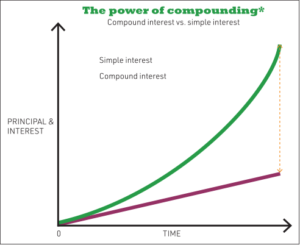
Time, she says, is your greatest asset—something Nick understood early on and took to heart. “It allows you to maximize the benefits of compound interest. Contributions will grow and grow over the years, earning interest on interest on interest. Even small contributions can make a significant difference down the road,” Andie explains. And Nick has used his time wisely.
Catching up with Nick
Twelve years have passed since we last talked with Nick. One has to wonder how long a 24-year-old can continue such a rigorous regiment of saving—a regiment, Nick said at the time, that others considered a little crazy, unreasonable, or impossible to maintain with all the temptations dangled in front of fresh-faced 20 somethings with so much life to live.
Andie adds, “It’s especially hard for young educators to plan for a retirement that is decades away because there’s a lot of competition for the earned dollar. They typically have student loans, they’re trying to launch their career, they’re setting up a place to live and the expenses that go along with that, and perhaps buying a car. And then there’s a social life that may vie for a piece of the pie…restaurants, concerts, and trips. Later it might be a wedding, a house, and kids. It’s a lot to manage.”
So, the big question now is: Was Nick’s approach sustainable? How committed has he been to his plan? To feed our curiosity, we checked in with Nick to see what his life looks like 12 years later.
Tending to his grapes…and his plan
We tracked Nick down not in a classroom, but in a vineyard. No, he wasn’t on a wine tasting tour. He was working…in his vineyard. This is where he spends most of his summer, between rows of grapevines, tending to his crop. Nick still teaches—now with the Port Washington school district—but he says, “I’m essentially a farmer as well.”
The vineyard is the result of a decision to stop working for other people during the summer. “It’s all part of the plan,” he says, the same plan he had at 24—retire early. Only now it’s a plan he shares with his wife, Andrea, and together they’ve made a few tweaks.
“There was an opportunity and we took it. In 2014, we planted our first vines—just 500—and now we have 5,500. Small local vineyards are increasingly popular,” he says. And he’s right. According to the Wisconsin Winery Association, in 2000 there were fewer than 100 acres of vineyards planted. In 2019, it was well over 1,000. The number of Wisconsin wineries also increased from 13 to 110 in that time. “There’s a market for the grapes right here in Wisconsin,” Nick adds.
The sooner you start planning, the better your odds of retiring with the money you’ll need to enjoy it.
Evaluating risk
When asked about the risk of the venture, Nick doesn’t hesitate. “Like farming, it’s a risky business for sure. We could get one hail storm and lose it all. But life is full of risk. The best you can do is prepare for it. We would be distraught if that happened, but financially, we would be fine.”
Risk is part of the investment equation. All investments carry some degree of risk. “The key is knowing what the potential loss is, what that might mean for our situation, weighing it against the potential for gain, and then deciding what we can stomach,” he says.
Like most investments, the vineyard wasn’t an instant money-maker. “We didn’t make a penny for three years. And what we did make went back into the vineyard. But it’s what we expected,” he said.
He worked the vineyard for two years while still teaching and living in Brookfield, but in 2016 he and his family moved to Port Washington. “It was a good move. I really like the district. Financially, it made sense and it’s closer to the vineyard, which is in Fredonia.”
Balancing compound efforts
 In addition to the vineyard, Nick and his wife Andrea have dabbled in a few other ventures to help toward their goal. As one can imagine, he is busy all the time—also part of the plan. “I’m 37. We only have so many years to continue at this pace. Too many people live by a ‘work to grave’ concept. Our plan is to get the time back later by putting the time in now. At this point, we have a ten-year window to stretch ourselves. Time is our biggest asset,” he emphasizes.
Some might think Nick’s life balance is out of whack, but he assures us that is not the case. He is married with two young daughters. “I’m 100% satisfied with my life balance. My number one priority is to raise good, happy, successful kids. I always make time for my family. We sit down for supper every night as a family.
“There are times when it’s go, go, go, but then it slows down,” he says. “For example, September stinks. I work every single day at the vineyard during harvest. But then things settle down a bit.”
He admits to missing out on some things he enjoys, like fishing. “I love to fish, but I don’t have time. I’m banking time for that in the future.”
It’s hard to imagine Nick slowing down too much in retirement, but then, his notion of retirement may not match up with most. “The word retirement may be out,” he suggests. “Maybe it should be changed to ‘finding your second calling.’” Thus, the vineyard—but he’s hoping he won’t be doing all the work at that point.
Financial partnership
Nick says none of this would be possible if he and his wife weren’t in lockstep when it comes to finances. “We have the same goals and we have conversations regularly about our finances. It’s a partnership.”
It turns out that having a financially compatible spouse makes for a strong marriage. Studies show that opposing attitudes about money, conflicting priorities and goals, and different spending behaviors are among the top reasons couples divorce (2019 Ramsey Solutions study).
“I wouldn’t be where I am without her. Marrying my wife was the best financial decision I’ve ever made.”
Get yourself a plan
And so it seems that Nick has remained committed to his original plan: Do what it takes to retire early. “Nick offers good tips for building financial security,” Andie says, “but most people won’t likely practice them with the fervor and discipline that he has. Everyone’s circumstances are different, as are their retirement goals. How much you need to retire depends on many factors: when you retire, your lifestyle, and what you plan to do in retirement. Will you travel? Do you have expensive hobbies? Additionally, will you retire with debt, like a mortgage? And, don’t forget about health insurance costs before Medicare kicks in. If you are not planning to step out of the workforce early, a less rigorous approach may work. In any case, everyone should have a retirement plan.”
If you don’t have a plan or want to review your current plan, remember you have a resource at Member Benefits. Our financial planning services are designed to fit your style and needs—including Do It Yourself, Financial Coaching, and Financial Planning Advice. “The sooner you start planning, the better your odds of retiring with the money you’ll need to enjoy it.”
Andie is quick to point out that even if you didn’t start saving with a 403(b) or IRA as early as Nick, it doesn’t mean you can’t start now. She encourages public school employees of any age to focus less on the amount they can save right away and more on getting started. “If you haven’t started saving, don’t wait any longer. Make today the day,” she emphasizes. “Increasing contributions when you can is important, but getting started is critical because it’s extremely difficult and costly to make up for the lost time.”
As for Nick, it appears he is on track to becoming financially secure and making his early retirement dream come true. With any luck, he’ll be enjoying the fruits of his labor, and maybe a glass of wine, while someone else tends to his grapes.
Nick’s financial credo
The credo by which Nick and his wife Andrea operate is fairly simple…and it hasn’t changed much in 12 years.
We don’t overextend ourselves. It has nothing to do with how much you make, it’s about choices and priorities. We don’t take extravagant vacations, and I’m driving a 2000 Buick.
We save and plan like there will be no Social Security and no pension when we retire. We fully fund our retirement accounts. It’s probably the most important thing you can do.
We try to live frugally. We don’t try to keep up with the Joneses. It’s an easy trap to fall into.
We don’t take risks we can’t recover from. You have to understand the risks you are taking and what the impact of loss would be on your finances.
Get more of the story!
Read the original story about Nick and how saving big for retirement and taking advantage of compound interest put him ahead of the game. View the Summer 2010 magazine.
We’re here for you
Learn more about Member Benefits’ programs and services by exploring our website or calling 1-800-279-4030.
*For illustrative purposes only. Your actual situation may be different depending on future rates. No guarantees are expressed or implied.
New addition to target retirement funds
The Vanguard Target Retirement 2070 Fund will launch on August 8, 2022, joining the existing lineup of Vanguard Target Retirement funds at WEA Member Benefits. It will be an age appropriate investment option for anyone born on January 1, 2003, or later.
The fund will be mixture of the following: 54% U.S. Stock, 36% Foreign Stocks, 7% U.S. Fixed Income Securities (i.e., Bonds), and 3% Foreign Fixed Income Securities (i.e., Bonds). The initial allocation in the fund is considered to be an aggressive portfolio with an expense ratio of 0.08%.
The 2070 fund will begin with this allocation mix and, like all target retirement funds, slowly rebalance over time to become more conservative—transitioning from more stocks to more bonds in order to reduce market risk as the target date approaches.
If you have any questions about the fund, please call us at 1-800-279-4030.
Do you know these IRA facts?
Did you know:
- You can contribute to as many IRA accounts as you want. However, the total you can deposit across all of your accounts is limited to the annual maximum of $6,000 ($7,000 if 50 or older) in 2022.
- Age is no longer a limitation. Most anyone with earned income can contribute to a Traditional IRA, including minors. And the passage of the SECURE Act means most people can contribute to a Traditional IRA past age 70½ as long as they have earned income.
- You don’t need to take RMDs from all of your IRAs. In most cases, you can choose to take it all from one IRA or from a combination of IRA accounts.
- You can roll over old accounts into an IRA. If you have an old 403(b) or 401(k), you may be able to move that money into an IRA.
- Member Benefits has expanded our IRA eligibility guidelines. If you live in one of the eligible states outside of Wisconsin, you and your family* may enjoy the benefits of saving with a WEA Member Benefits IRA.
P.S. The deadline for putting money into IRAs for this year is April 15, 2022. This includes both Roth and Traditional IRAs. If you didn’t max out your 2021 IRA contributions, now’s your chance. (Consult your personal advisor or attorney for advice specific to your unique circumstances before taking action.)
*To be eligible for this program, you must meet the IRS eligibility requirements for contributing to an IRA. Restrictions may apply. Certain state residency required. Your spouse/domestic partner, parents, parents-in-law, and children and their spouses may also participate in our IRA program if they live in one of the approved states.
Understanding your 403(b)
What is a 403(b) plan?
A 403(b) plan, also known as a tax-sheltered annuity (TSA) plan, is a retirement plan for certain employees of public schools and certain other 501(c)(3) tax-exempt organizations. It allows employees to contribute some of their salary to the plan, and the employer may also contribute to the plan for employees. As of 2018, 403(b) plans covered around one in five U.S. employees who have around a trillion dollars of savings.
How it works
A 403(b) can be a great way to save for retirement. It is similar to the private sector’s 401(k). A salary reduction agreement (SRA) must be completed to start payroll contributions into your 403(b) account.
Your district may offer an employer match. In other words, the district matches your contributions. For example, it could be fifty cents on the dollar up to a certain level, a flat amount, or many other types of options.
Whatever kind of match your district offers, if you’re not putting money into your 403(b) and there’s a match, then you may be leaving money on the table.
Contribution limits
The most an employee can contribute to a 403(b) account out of their salary in 2021 is $19,500. Those age 50 or over at the end of the calendar year can also make catch-up contributions of $6,500 beyond the basic limit on elective deferrals. If permitted by the 403(b) plan, an employee who has at least 15 years of service with the same eligible 403(b) employer may be able to contribute an additional $3,000. Learn more about contribution limits.
Roth option
Some districts offer a Roth 403(b) option. Roth contributions are after-tax, which means you pay taxes now on your contributions, but all qualified* withdrawals, including earnings, are tax free.
This is different from 403(b) contributions that are made on a before-tax basis. Before-tax contributions reduce your taxable income and defer taxes until you withdraw the money.
One of the greatest benefits of Roth savings is the ability to reduce your tax liability in retirement.
For decades, the assumption has been that most people would be in a lower tax bracket in retirement and thus would benefit from before-tax savings. However, changes in tax policy, including lower tax rates, the taxation of Social Security, and other deductions available under the tax code increase the chances that you could be in the same or higher tax bracket when you retire.
These changes mean that before-tax savings alone may not be the optimal tax strategy in every situation.
So the question is, do you want to pay the taxes on your contributions now or when you retire?
Exchanges, transfers, rollovers
You can move funds from another retirement plan into a WEA Tax Sheltered Annuity Trust 403(b) account, but the way these are handled is based on the type of retirement plan you have and your school district plan documents.
An exchange, if allowed by your school district plan, is when you move 403(b) funds from one district vendor to a second district approved vendor while employed by the same school district.
A transfer, if allowed by both your current and former school district plan, is when you move your 403(b) funds from a previous employer’s plan to your current employer’s plan.
A rollover is when you move funds from a different type of retirement account, such as an IRA, 401(k), or 457(b), to your current employer 403(b) plan. Check with us to see if rollovers are allowed into your employer’s plan.
It is also important to remember that a Roth 403(b) can only receive funds from another Roth 403(b) or Roth 401(k).
We can help you. Talk with a Member Benefits representative to discuss all the rules and procedures and to get your questions answered.
The importance of saving
As a Wisconsin public school employee, you have the Wisconsin Retirement System (WRS) and Social Security for retirement. But the two alone are not enough. On average, Social Security payments make up only about 14%–28% of retirement income for those who receive WRS. To build a secure retirement, you need three things: WRS, Social Security, and your personal savings, such as the 403(b).
Learn more about Member Benefits 403(b) program or enroll today.
1-800-279-4030
weabenefits.com/403b
weabenefits.com/enroll
*For qualified withdrawals from the Roth 403(b), the participant must be age 59½ or older and have had the account for at least five years.
Sources: IRS, Forbes
Are multiple retirement accounts costing you money?
According to the financial tech company, Capitalize, by the end of 2021 there will be an estimated 25 million “forgotten” 401(k) accounts in the U.S., with an average account balance of approximately $55,000 and representing nearly $1.35 trillion of assets in total. In aggregate, these forgotten 401(k) accounts could be costing retirement savers a whopping $116 billion annually from higher fees and lower investment returns.
Often 401(k)s are left behind by people who have changed jobs or terminated their employment. People today change jobs more often—on average, 12 times over their careers. That could mean dealing with 12 different 401(k)s and/or 403(b)s over time, putting a person in a potentially very costly situation.
Steps are being taken to protect savers’ assets. Auto portability is a fairly new 401(k) plan default feature that automatically transfers small-balance retirement savings when participants change jobs. Bipartisan legislation to create a national lost-and-found database to help plan participants keep track of their retirement accounts has been introduced once again, and could end up being part of a larger SECURE Act 2.0 retirement reform package that may come out late this year. Lawmakers are also looking at ways to solve the problem of 401(k) “leakage,” which is when participants cash out their account instead of rolling it over to a new retirement savings account.
If you want to consolidate and aren’t sure where your old 401(k) is, there are three places it may be: In the old account set up by your employer; in a new account set up by the 401(k) plan administrator; or in your state’s unclaimed property division.
Do you or your partner/spouse have multiple accounts from old jobs? Did you have a retirement savings provider change at work and now have a second account? Consider rolling over to a WEA Member Benefits IRA account. It could save you money because of our low annual administrative fees and annual fee caps. And our IRA is open to your spouse/domestic partner, parents, parents-in-law, and children and their spouses, even in some states outside of Wisconsin.
Contact us for more information at 1-800-279-4030, Extension 8577 or visit weabenefits.com/rollover.
Restrictions may apply. Certain state residency required.
Simplify your life with account consolidation
Here are three reasons you may want to consolidate your retirement accounts.
Economic advantage
Consolidation may save you money by eliminating or reducing fees. Fees eat into your bottom line, which is even more crucial once you retire. Member Benefits retirement programs offer low fees that are capped annually, which keep costs in check (mutual funds fees still apply). Ask for a complete list of fees that may apply to each of your accounts, including mortality and expense fees, surrender charges, and custodial fees. Member Benefits does not charge these fees. Visit our Fees Matter page for more information.
Comfort
As you approach retirement, you need to consider reducing your risk as you have more to lose and less time to make up for market losses before you need the money. If you have more than one account, you may have different portfolios with differing levels of risk, and you’ll need to keep track of all of them.
Feeling comfortable with the level of risk you take when investing is key. Revisit your asset mix periodically to make sure your tolerance for risk matches how you’re investing your money. Having one account makes managing your risk easier to do.
Simplicity
A common reason people consolidate is convenience. Some or all of these might appeal to you.
Less work, more clarity. Managing multiple accounts can be a lot of work. If you have five different accounts, you receive five different quarterly statements. Each one reports the quarter’s activities differently, so it’s no small feat to get a glimpse of your overall situation. Putting your assets in one place, such as with Member Benefits, gives you a clearer snapshot of where you are financially.
Consolidation also makes tracking contributions and withdrawals easier. Because there are limits to how much you can contribute to most retirement accounts—penalties will apply if you go over—multiple accounts require you to more closely monitor where and how much you contribute.
Headache-free RMDs. The Internal Revenue Service (IRS) requires you to start withdrawing required minimum distributions (RMDs) from certain types of accounts, such as a 403(b) and Traditional IRA, generally at age 72 (or 70½ if you turned 70½ before January 1, 2020). When calculating your RMD, you must consider all of your accounts. Although you have some control from where and how you want your RMD to be taken, you are also responsible for communicating your withdrawal plans to all of your account providers. Failing to make your intentions clear can go bad—if an account owner fails to withdraw an RMD, fails to withdraw the full amount, or fails to withdraw by the applicable deadline, the amount not withdrawn is taxed at 50% (IRS).
One point of contact. Questions about your statement or asset allocations can get answered with one phone call or by logging in to one account. And tasks such as updating an address or changing a beneficiary are made simple.
Remember, you can stick with us—we’re here for you up to and through retirement. Take care when moving money so you can avoid common and costly mistakes such as surrender charges and other deferred sales charges. We can help talk you through what to consider. Call us about consolidating your accounts at 1-800-279-4030.
Get the facts about Member Benefits’ retirement and savings program
MYTH: You have to move your money out of WEA Member Benefits because (fill in the blank).
FACT:
Despite what you might hear, you DO NOT need to move your money from your 403(b) or IRA with Member Benefits if you:
- Retire or leave your job to take another job (even if it’s not in education).
- Turn (insert any number) years old.
- Move out of Wisconsin.
MYTH: Consolidating your money will make it easier for your beneficiaries.
FACT:
Sure, consolidation makes managing your money easier, but unless you are consolidating into a low-cost program, your account balance could take a hit.
MYTH: You won’t have access to your 403(b) funds in retirement because it is in an “annuity” (tax-sheltered annuity).
FACT:
Our program has flexible withdrawal options without surrender periods (the amount of time an investor must wait before withdrawing funds from an annuity without penalty). Often individual annuities or insurance company annuities have surrender/maturity periods that are many years long (sometimes 5–12 years). Ours doesn’t.
MYTH: My beneficiaries are specified in my will, so I’m set.
FACT:
Your will is not enough. The beneficiary designated on any retirement account supersedes the instructions found in a will or a trust. So be sure yours are up to date on all of your retirement accounts, and review and update your accounts whenever you experience any major life events (marriage, divorce, birth of a child, death of a family member, etc.).
MYTH: There are fees to transfer money from other retirement accounts into Member Benefits program.
FACT:
Nope! The WEA TSA Trust does not charge fees to transfer money from other retirement accounts into our program. However, if your retirement account at your current carrier has a surrender fee, or if you move money from a mutual fund that has a redemption sales charge, you may be charged a fee from your current carrier. Contact your current provider to review possible charges.
MYTH: There are fees to get funds out of your Member Benefits account upon retirement.
FACT:
Nope again! Member Benefits does not charge transactional fees or surrender charges even if you move your money out. (Mutual fund redemption fees may apply in certain situations.)
MYTH: Member Benefits doesn’t offer nonretirement accounts.
FACT:
Yes, we do! We have been offering Personal Investment Accounts since 2018. It’s a way to invest your money outside of a retirement account without using a cash account such as savings, checking, or certificates of deposit. It can be registered in just your name or opened jointly with anyone.
MYTH: In order to open a WEA Member Benefits IRA, I have to live in Wisconsin.
FACT:
In case you missed it, Member Benefits recently opened our IRA program to folks who live outside of Wisconsin! If you meet eligibility guidelines and live in one of the states that offer our IRA program, you and your family may enjoy the benefits of saving with a WEA Member Benefits IRA.
Have some questions about your retirement account or need help getting started? Contact us at 1-800-279-4030 or retirement@weabenefits.com.
NEW! IRA program available outside of Wisconsin
For those who meet our eligibility criteria, we have great news! We’ve expanded our IRA eligibility guidelines to include those who live in certain states.
Our IRA is open to family members
Family may also participate in our IRA program if they live in one of the approved states, so you can all enjoy the benefits of saving with a WEA Member Benefits IRA.
Take advantage of this savings opportunity
For more information and to learn which states are eligible, contact us.
- CALL 1-800-279-4030
- MORE INFO IRA program
- ENROLL Enroll online
To be eligible for this program, you must meet the IRS eligibility requirements for contributing to an IRA. Restrictions may apply. Certain state residency required.
Women and retirement: 6 challenges to a secure future
A comfortable retirement is an expensive endeavor for everyone. Financial planners suggest one should shoot for an annual retirement income that’s roughly 85% of your preretirement income, depending on your continued fixed expenses. Translation? Everyone needs to save—a lot. But women should actually be saving more.
“Women are at a much higher risk of facing financial uncertainty in retirement and retiring with considerably less savings than men,” says Andrea Hartwig, Financial Planner at WEA Member Benefits. “Women face unique challenges. Generally, they spend fewer years in the workforce, earn less income, gravitate toward conservative investments, and have longer life spans than men.”
While not every woman will experience the same challenges, it is likely that most will face more than one, which compounds the problem. “Their road to retirement is more long and winding than that of their male counterparts,” explains Andrea, “making it even more critical for women to recognize key life events that can trigger a financial setback. Women need to be aware and prepare.”
Challenges facing women
1. LIVING LONGER
The life expectancy for men in the U.S. is 76 years. For women it’s 81.1 While five years may not seem like a lot over a lifetime, it does mean the average woman will need to save more to fund the extra years compared to the average man. From a financial perspective, this is significant—and the price tag on those years will likely be higher.
Longevity brings with it a greater potential for increased health care costs. “People often believe that once they hit 65 and qualify for Medicare, their health care costs are covered, but that simply isn’t the case,” says Andrea. “Medicare is a great benefit, but it’s far from free. There will still be out-of-pocket expenses that are not insignificant.”
It is estimated that the average couple retiring at age 65 will need $285,000 to cover health care and medical costs in retirement. Women will need more than men—$150,000 vs. $135,000.2 And that doesn’t include long-term care services, which, despite what many think, are not covered by health insurance or Medicare. This is an important consideration as:
- Seventy percent of those turning age 65 today will need some type of long-term care services in their remaining years.
- Women make up more than 70% of nursing home residents and on average need care almost twice as long as men.
- The annual median cost for a private room in a nursing home in Wisconsin is about $112,146, and a private room in an assisted living facility is $51,600, around the same cost as 40 hours a week of a home health aide.3
Health care continues to be one of the largest expenses in retirement. The longer you live, the greater the cost will likely be.
2. EARNING LESS
While strides have been made regarding equal pay, women are not always paid as much as men in the same fields and positions. According to the U.S. Census Bureau, women earn about a third less than men during their working lives, resulting in smaller contributions to Social Security, pensions, and other retirement accounts. It is a major contributing factor as to why women are 80% more likely to wind up in poverty than men when they’re age 65 or older.4
Women are also more likely to work part-time because they often fulfill other roles in the family requiring their time (like caregiving). Part-time workers may not qualify for their employers retirement plan, and again, lower income means less going into Social Security on their behalf.
3. TAKING CARE OF OTHERS
The pay gap issue is amplified for women who drop out of the workforce temporarily to be stay-at-home moms or to care for sick or aging parents. With 75% of all unpaid caregivers being women, the impact is far reaching and has long-term financial implications.5
Here’s what that means for women financially.
- Every year spent out of the workforce costs families three times the parent’s annual salary in lifetime income.6
- Women who take time off can fall behind in rank and miss out on opportunities for career advancement and increased income.
- Loss of access to an employer-sponsored retirement plan and a reduction in pension accumulation.
- Loss of contributions and years of credits to Social Security benefits.
However, Andrea notes, this shouldn’t discourage women from taking time out of their careers.
“The key is to plan for it. The earlier you start saving and the more you contribute, the more time you can comfortably take off from your career,” she says.
4. INVESTING TOO CONSERVATIVELY
By and large, women gravitate toward more conservative investments than men. Playing it safe is more comfortable and may be a good approach when near or in retirement, but such a strategy usually means lower earnings over the long run. “If you take this approach, you may need to invest more money to meet your goals. But if there’s a time to be more aggressive, it’s when you’re young. Because of the long timeline, you are in a better position to recover from market fluctuations,” says Andrea.
Having a better understanding of investing and the relationship between risk and reward will help you find an investment strategy that will help you reach your goals and still sleep at night. It’s a balance. And, don’t be afraid of getting some professional help. You can go to weabenefits.com/financialconsults to learn about financial consultation options and set up a phone or video conference with a financial planner.
The Investor Suitability Profile Questionnaire offered by Member Benefits can help you determine the level of risk you’re comfortable with. After providing some basic information about your situation and answering six questions, you will receive an indication of your investment style along with an appropriate investment allocation.
5. BEING SINGLE or SINGLE AGAIN
This challenge is really more about planning for your future than it is about marital status. Because nearly every woman will have sole responsibility for her finances at some stage in her life—whether single by choice, divorce, or widowhood—it’s important for women not only to have a plan but to also have ownership in the plan.
“Women should always be involved in conversations about finances, whether that’s at the financial advisor’s office or at the dining room table at home. This is not the place to hand off control. Taking responsibility for your own financial security will prepare you for whatever turns your life may take,” encourages Andrea.
6. MAKING BIG DECISIONS WITHOUT ALL THE FACTS
It goes without saying that any big decision should be made with care—and there may be no greater decisions to make right now than about your financial future.
“Here is where having knowledge about your long-term finances comes in handy,” says Andrea. Knowing how you (and your spouse if applicable) are saving and what kind of accounts you have—403(b,) IRA, 401(k), and/or your Wisconsin Retirement System—is significant, because each account type has different rules and restrictions, and each serves a strategic role in your retirement income stream.
Without that knowledge, people can make costly and irreversible mistakes. For instance, it’s all too common for people to dip into their retirement account early. In fact, 52% of all savers take early withdrawals—a move that can cost you dearly in three ways:
- Penalties for unqualified distributions typically run 10% but could be higher if the account has surrender fees.
- Taxes may apply to withdrawals and may push you into a higher tax bracket.
- Earnings on the money you withdraw will cease, and you will lose out on future growth from compound interest.
“While this may be tempting, especially in difficult times like the COVID-19 pandemic, it really should be a last resort option,” says Andrea. “Your retirement savings should be earmarked for retirement. Building an emergency fund where the money is easy to access is a better way to plan for surprise financial situations that pop up in daily life.”
It’s all connected
Generally, the closer you get to retirement, the more complex your finances become—and it’s also a time when you are financially vulnerable. You will have several big decisions to make, including when to stop working, when to take Social Security, how to pay for health care, and how to generate cash flow from your retirement assets. These decisions are interconnected and could make a difference in your living costs and lifestyle in retirement—and ultimately determine when you can retire.
Andrea advises, “You really want to have a handle on these well before retirement. If you have a solid plan and an understanding of what your plan entails, the decisions will be easy to make.”
The information in this article is provided only as a summary of complicated topics and does not constitute legal, tax, investment or other professional advice on any subject matter. Further, the information is not all-inclusive and should not be relied upon as such. All investments hold risk and there can be no guarantee that your investments will be profitable or that your goals will be achieved.
SOURCES
1 U.S. Census Bureau | 2 HealthView Services (a provider of health-care cost projection software) and Fidelity Investment (2019)
3 Wisconsin Office of the Commissioner of Insurance (OCI) (2019) | 4 2018 report from the National Institute on Retirement Security
5 American Association for Long-term Care | 6 Center for American Progress
ARTWORK: Daisy Garrett
Take advantage of our financial planning services
Our financial advisors specialize in working with Wisconsin public school employees, understand the unique retirement benefits available to them, and are experts in coordinating those benefits. We take time to help you identify and prioritize your financial goals, determine whether you are on track to meet your goals, and provide you with the information and tools to help you get there.
Member Benefits’ financial planning services are designed to address the changing needs of Wisconsin public school employees at various points in their careers and lives. And there are no commissions, which means you receive an unbiased analysis of your situation.
weabenefits.com/financial-planning
1-800-279-4030, Extension 6730
Decisions, decisions on distributions
Your required minimum distribution (RMD) is the minimum amount you must withdraw from your account each year, but you can choose to withdraw more. You generally have to start taking withdrawals from your IRA, SEP IRA, SIMPLE IRA, and your retirement plan account at age 72 (age 70½ if reached prior to January 1, 2020) or the calendar year you retire from an employer through which you contributed. Roth IRAs do not require withdrawals until after the death of the owner.
If you’re not sure what to do with your RMD by December 31, we have a few ideas for you.
Donate
Did you know you can choose to give up to $100,000 to a qualified charity from your Individual Retirement Account (IRA) without counting it as taxable income when you are over 70 ½ years old? This type of gift is called a qualified charitable distribution (QCD). It’s not only a powerful incentive for charitable giving, it also has tax benefits. QCDs count as IRA distributions, so they can be used to satisfy all or some of your required minimum distribution (RMD) for the calendar year.
Member Benefits requires you to complete a specific form if you wish to take advantage of this IRA option. Consider giving a donation to WEA Member Benefits Foundation or one or more of your favorite charities.
Reinvest
If you don’t need the funds for necessities, consider opening a Personal Investment Account with Member Benefits. It’s a way to invest your money outside of a retirement account without using a cash account such as savings, checking, or certificates of deposit. You can choose from individual, joint, UTMA, or trust accounts.
Ask us about the tax benefits of this type of account. For more information, visit the Personal Investment Account page.
Give
The Uniform Transfers to Minors Act (UTMA) provides an avenue for a grandparent, parent, aunt, and/or uncle to make monetary gifts to a minor. Or consider making a contribution to a 529 college savings plan (in Wisconsin, visit Edvest).
Transfer
If you have a Roth 403(b), you can roll the money into a Roth IRA, which has no RMDs for the original owner. You can also convert your Traditional IRA, Roth IRA, or pre-tax 403(b), but you will owe tax on the conversion.
Give us a call at 1-800-279-4030 if you have questions. As with most IRS provisions, we encourage you to work closely with your tax advisor to determine what would work best for your specific situation.